
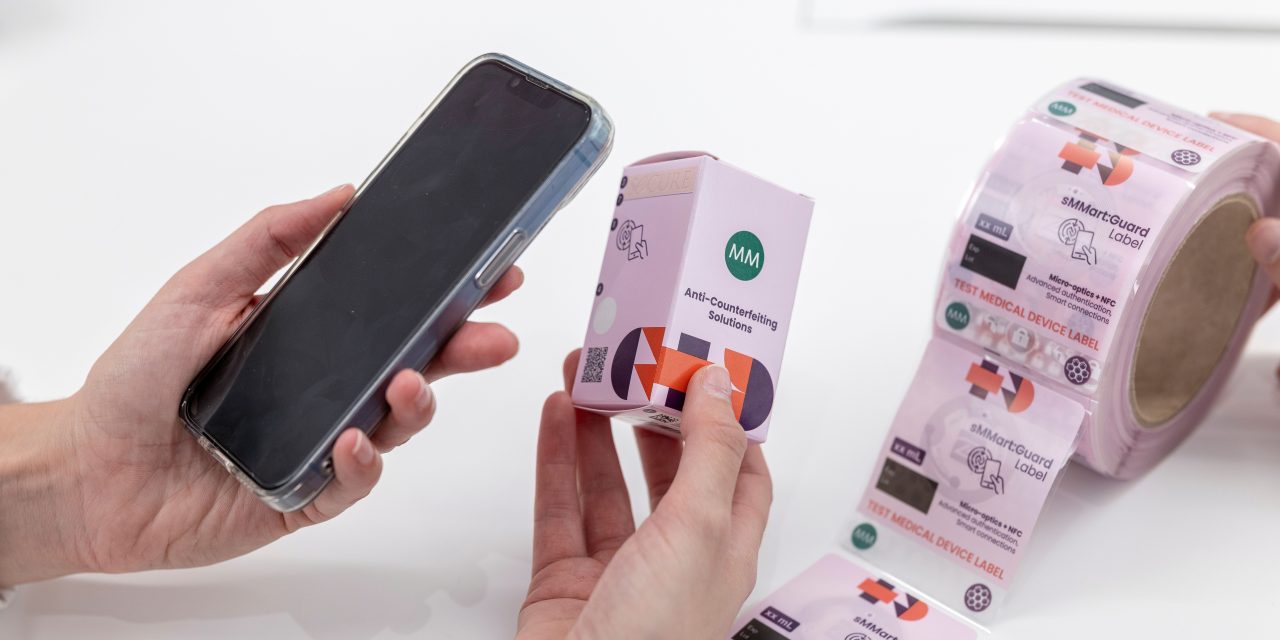
The right to patient trust must now be earned. With patient safety non-negotiable for the pharmaceutical industry, data integrity is quickly becoming critical to regulatory adherence. Between the EU Pharmaceutical Legislation reform, the arrival of Digital Product Passports and intensified FDA enforcement with digital inspection models, greater expectations are now being placed upon pharmaceutical companies to generate a reliable, accurate and traceable digital audit trail.
Tighter legislation, combined with an increasingly complex ecosystem involving manufacturers, distributors, packaging leaders, healthcare providers and patients, means that data integrity and its management through the value chain poses a significant challenge for the industry.
It comes at a time when the proliferation of online marketplaces, which lack clinical authority or regulatory oversight, and increased use of social media over the years has resulted in the perfect opportunity for counterfeit prescription drugs, medication and supplements to hide in plain sight. As these often come from legitimate sources via grey market channels, many of which arrive in pristine packaging, they present a substantial risk to self-administering patients that are unaware of their unapproved and unregulated status.
One such widely reported counterfeiting incident involving GLP-1-related injectables has further raised regulatory concerns from the World Health Organization and other medical health agencies. As part of Operation Pangea XVII by Interpol in 2025, over 50 million illegal doses of medications worth USD 65 million were seized, with the organisation dismantling 123 criminal groups worldwide from infiltrating the commercial weight loss market.
Overcoming barriers
A clear focus on product authentication, security and brand verification is now necessary. This is where Radio Frequency Identification (RFID) and Near Field Communication (NFC) technology can help the industry in meeting evolving legislation requirements, while reducing the risk of counterfeiting. While RFID is best suited to supporting traceability through the supply chain with automated authentication and high-speed inventory checks, NFC enables short-range and encrypted communication via smart devices to physically tie authenticity to product integrity.
Although NFC technology has been locked in an experimental phase for many years in the pharma industry due to fear of OEE risks and manufacturing line disruptions, a major increase in counterfeiting has outweighed those risks in favour of NFC utilisation and deployment in secondary packaging. Fortunately, with digital maturity comes easier accessibility. This means NFC components no longer come at a high price, enabling the industry to rapidly adopt, design and deploy NFC into carton packs and labels.
The key to overcoming these barriers and accelerate NFC adoption rates cannot be achieved alone. Involving packaging engineers early in the design, packing and distribution process can unlock an NFC solution that delivers zero disruption to existing packing lines and without modifying equipment.
 Going beyond the smart features
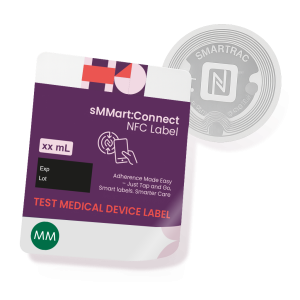
As leaders in healthcare packaging solutions, we know the industry still requires secondary packaging and labels to function as intended should the smart features remain inactivated. At MM Pharma & Healthcare Packaging, we integrate NFC readers directly into the manufacturing lines to capture data, verify its accuracy and generate comprehensive reports for brand owners. This data can then be transmitted to the brand owner, should they require it, enabling them to track products throughout the supply chain and verify its authenticity at any point.
For example, if a criminal organisation attempts to counterfeit a product, the brand owner will receive an alert if an attempted scan is made, noting its exact geographic location, or if the secondary packaging is tampered with in any form. NFC antennas can be integrated and combined with tamper-evident features that are either fibre-based or included as part of the label. This design is best suited to counteracting fraudulent injectables by blocking the individual from refilling the pen with an unapproved speciality chemical or placebo, or by attempting to reuse genuine cartons.
NFC chips can also be concealed by embedding it between the carton layers. As the first interaction is permanently recorded, brand owners can instantly tell if the chip is missing or if its ID tag has been reused elsewhere due to backend flags cloning. This type of concealment is ideal for blocking genuine-print counterfeit cartons and fraudulent clones of batch numbers.
NFC technology can also be built into cartons that require two-stage authentication. This option is ideal for globalised supply chains as it blocks illicit local refill and repack schemes. For instance, a hidden or internal NFC that is only readable by manufacturers and distributors can be used and locked after aggregation. When the product reaches the patient, the visible NFC trust mark can then be tapped by a smartphone app in the patient’s possession to verify its authenticity. This helps to close the verification loop between manufacturer, distributor and patient by ensuring that each step has been validated to deter diversion techniques and misaligned components outside the authorized flow.
With multiple validation checkpoints, only products that meet the specifications and pass both physical and digital quality assurance checks can then be shipped. Not only does this system increase operational efficiency, strengthen data integrity and encourage confidence between all parties in the supply chain, but it also enhances patient trust at point of use.
A patient-centric approach
In a 2021 study, where the intention was to automate prescription identification for elderly patients in hospitals where Arabic is their native language, NFC-enabled smart technology was integrated into the packaging to assist with communication barriers and reduce the risk of serious health consequences after inaccurate or misconstrued prescription instructions were applied. The results of the study highlighted that 57.1 per cent of pharmacists found the application clear and understandable, with 71.1 per cent saying that it enhanced patient care at point of use. In addition, 66 per cent of patients preferred using the NFC smartphone application prior to other methods available at the time.
Five years on and NFC technology has reached its digital maturity stage. For patients, that now means using electronic blister packs that automatically record the date and time when each cavity is opened should there be cognitive challenges. Smart labels and cartons now deliver spoken instructions from a simple tap of a device for those with visual impairments, and content can be delivered in multiple languages with dynamic font resizing to navigate communication barriers. Secondary packaging can also be paired with intuitive opening mechanisms or embossed tactile markers, without affecting the embedded NFC technology, to support one-handed use.
When key stakeholders are involved early in the design process, patient confidence can be instilled from day one. It’s time for the pharma industry to reimagine their design production and distribution processes by placing patient trust at the heart of their operations. NFC-enabled smart packaging may hold the key, but only a connected ecosystem with the same goals has the capability to unlock it.
To learn more about MM Packaging and its activities, please visit https://mm.group/packaging/markets/pharma-packaging/
For the latest packaging news please visit: https://convertermag.com/category/latest-news/\
