
 March 2024: Innovating the way things are made with the use of machinery to automate, streamline and speed up production and productivity is something many manufacturers are realising is a necessity rather than an option. Investing in the automation of production lines and the processes that form the make-up of products like mattresses, bed, furniture and others that use materials such as foam is exactly that; an investment, something that you reap the rewards of either quickly or long-term, depending on the degree of the investment in such operations.
Whether a bespoke machine to serve one purpose, as a single element of the manufacturing process, or a larger fuller production line, automating the ways in which things are made and produced, or transported through the use of conveyors, by programming them to be faster, more accurate, safer and more efficient, with a conscious effort on reducing waste, investment in technology forms part of a digital transformation plan.
Industry 4.0 and 5.0 and the demand for digitalisation over digitisation has driven the consideration of using machines to work alongside, as well as in place of, operators, and in some cases working with  robots (or cobots). Our machines incorporate elements of automation, from sewing machines to conveyors that turn, flip and rotate, we also use light curtains and sensors to immediately stop to ensure the prevention of health and safety risk.
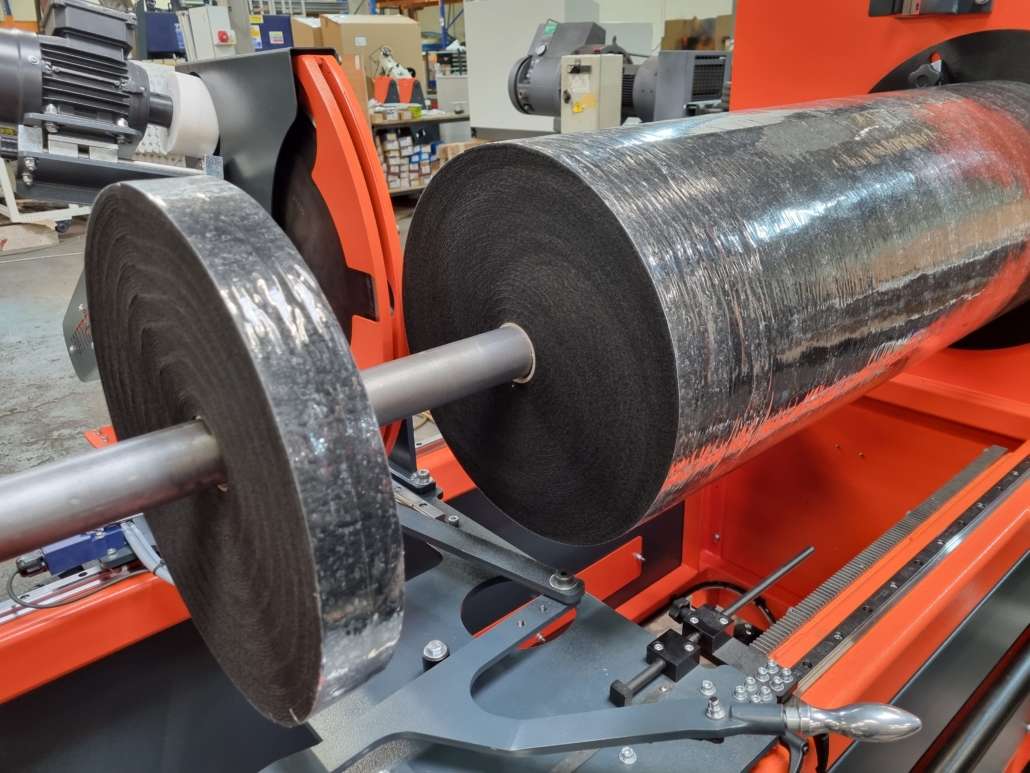
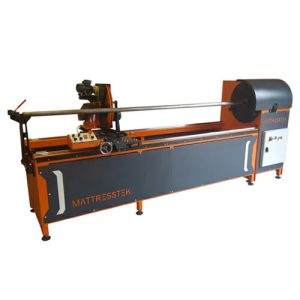
One machine that can be worth the investment to speed up and ensure accuracy, in the processing and cutting of a variety of materials, is our Roll Slitter. With a turning blade, sharpener, mandrel, measuring guide and re-rolling function, this machine can be used in the slitting of fabric, foam, film, paper, flooring and other materials like wool insulation; these are all things we have received enquiries for and ran testing of.
If the material requires re-rolling for tighter packing or compression, in order to ensure more accurate and cleaner cutting, there is a rewinding function whereby rolls can be unravelled and re-rolled. A roll layer counter and pneumatic support clamp can also be fitted in place of a more manual wedge to hold up the mandrel rod.
Technical Director, Shaun Peel, explains: “We initially designed, made and installed machinery for the mattress and bed manufacturing processes, across the world, but have been able to adapt and diversify to service the manufacturing of other products and processing of components. Although we still do machinery for cutting, measuring and slitting borders and panels, we also have machined for notching, folding, stamping and conveying.”