
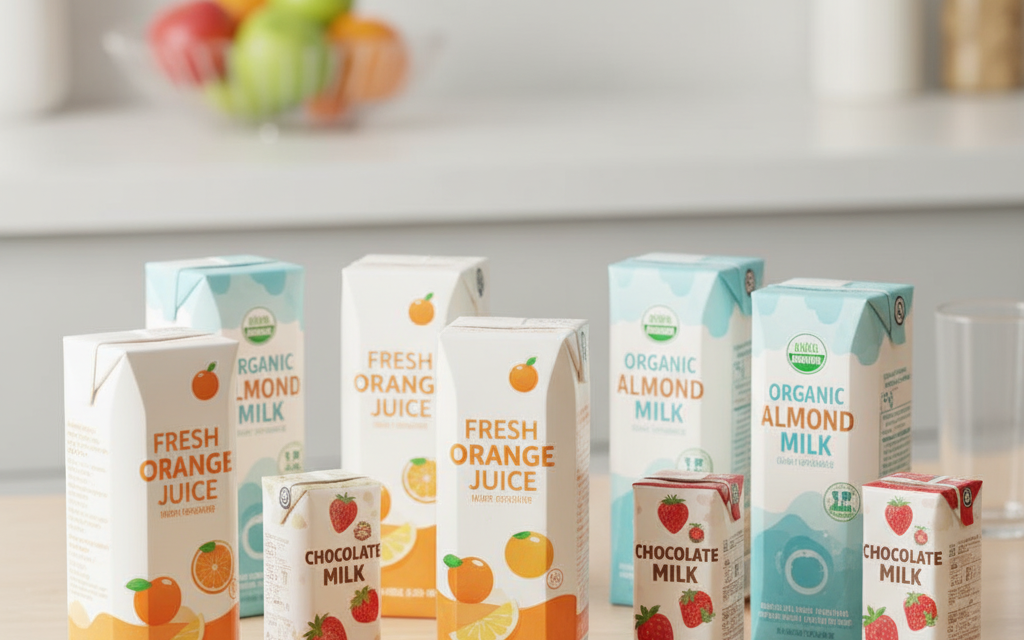
Liquid cartons are so commonplace that they rarely attract attention. Yet they represent one of the fastest-evolving segments of the global packaging industry. The familiar boxes that carry milk, juice, soups, and even personal care products are at the centre of a significant transformation, shaped by regulatory measures, shifting consumer preferences, and technological innovation.
This is no niche development. According to Research Intelo, the liquid carton packaging market was valued at USD 18.7 billion in 2024 and is projected to surpass USD 31.2 billion by 2033. That trajectory reflects a compound annual growth rate (CAGR) of 5.8 per cent. In packaging, where margins are often thin and volumes immense, such growth is remarkable.
Regulation and demand: Two forces converging
The global push away from single-use plastics and glass is the main driver of this shift. Governments across regions have introduced aggressive rules to curb plastic use, and cartons are positioned as an alternative that satisfies both sustainability goals and consumer expectations.
On one side, consumers increasingly prefer packaging that signals environmental responsibility. On the other, policymakers are reshaping industries with directives that carry legal weight. The European Union’s single-use plastics directive and extended producer responsibility schemes are prime examples. The convergence of regulatory mandates and visible consumer demand has created structural momentum in favour of cartons.
Regional leadership and contrasting growth stories
The market landscape shows a clear split between established leadership and emerging opportunity. Europe accounted for around 34 per cent of the market in 2024. This dominance is not accidental. The region benefits from mature packaging infrastructure, robust recycling systems and a consumer base already attuned to sustainability.
Asia Pacific tells a different story. With a projected growth rate of 7.2 per cent per year, it is the fastest-growing region by far. The drivers here are demographic and economic. Rapid urbanisation, a growing middle class, and rising disposable incomes create a surge in demand for packaged beverages and ready-to-consume products. According to the report by Research Intelo, this region’s expanding consumer base is a central force behind the market’s acceleration.
Other regions, such as Latin America, the Middle East and Africa, have shown slower adoption. The key barriers are limited recycling infrastructure and lower consumer awareness of sustainability benefits. While demand for safe, hygienic packaging is strong, the lack of processing capacity for multi-material cartons hinders widespread use.
Shapes and segments: The carton variations
Liquid cartons are not uniform. They appear in several formats designed for specific functions:
- Brick cartons: The most common type, rectangular in shape, designed for efficient stacking and cost-effective transportation. They dominate long-distance shipping for milk, juice and other non-carbonated drinks.
- Gable-top cartons: Typically used in refrigerated sections, these cartons are designed for easy pouring and resealing. They are common in premium milk and fresh juice categories
- Shaped cartons: A smaller but growing segment, focused on branding and differentiation. These designs help products stand out on crowded shelves, often used for specialty drinks or children’s products
Each type responds to unique market needs, from cost efficiency to consumer convenience and branding appeal.
Inside the carton: Material science at work
Liquid cartons are multi-layered structures. The main component is paperboard, which provides shape and strength. To hold liquids, thin polyethylene layers are added for moisture resistance and sealing capability. For aseptic cartons, a thin aluminium layer is introduced to block light and oxygen, ensuring long shelf life.
This combination of paper, plastic and metal creates both benefits and challenges. Aseptic cartons can keep products fresh for up to a year without refrigeration, reducing food waste and supply chain costs. However, the bonded layers complicate recycling. Separating the materials requires advanced facilities, which are not universally available.
This duality—effective preservation versus recycling complexity—defines the central challenge of the market. According to Research Intelo, companies are investing in bio-based plastics, recycled inputs and alternative barrier materials to address these issues.
Expanding applications beyond beverages
Traditionally dominated by dairy and juice, the use of liquid cartons is expanding into new areas:
- Pharmaceuticals: Cartons are increasingly used for syrups, nutritional supplements and liquid medicines. Their tamper-evident design and hygienic features make them attractive for healthcare applications
- Personal care and cosmetics: Cartons are being adopted for lotions, shampoos, conditioners and liquid soaps. Here, the appeal lies in sustainability signalling. Brands highlight the renewable paperboard content as part of their environmental commitments
These applications illustrate how cartons are no longer limited to traditional food and beverage markets. They are evolving into multipurpose solutions aligned with sustainability targets across industries.
Market dynamics and competition
The industry is described as moderately fragmented. Tetra Pak remains the dominant global player, credited with inventing and scaling the aseptic carton. The company continues to set benchmarks through sustainability pledges, including commitments toward net-zero emissions by 2030.
Other significant players include SIG, Cumbibloc and Illopak. Competition has shifted from purely cost-driven metrics to sustainability performance. The critical differentiators now include the proportion of recycled or bio-based content, certification of paperboard sourcing and partnerships that improve recycling rates.
Environmental, social and governance (ESG) factors are now integral to business strategy. Packaging suppliers that cannot demonstrate strong ESG performance face barriers to securing large contracts with global food and beverage firms.
Opportunities and barriers ahead
The market’s growth outlook rests on several opportunities:
- Expansion in fast-growing regions, particularly Asia Pacific
- Increased adoption of aseptic packaging, reducing waste and lowering storage costs
- Innovations in materials, especially bio-based plastics and aluminium alternatives
- Strategic partnerships to improve recycling infrastructure
Challenges, however, remain significant. Recycling remains the primary bottleneck. The complexity of separating bonded layers keeps recycling rates lower than desired and undermines the market’s sustainable image in regions without advanced facilities. Infrastructure gaps in emerging markets further slow adoption, even where demand exists.
The broader implications
The liquid carton packaging market reflects broader themes in global industry. It illustrates the tension between regulatory ambition and practical infrastructure, between consumer expectations and technological limitations. As governments impose stricter rules and companies push ESG agendas, the success of cartons will increasingly depend on whether recycling systems can scale to match demand.
The path forward may require deeper collaboration. Packaging manufacturers may need to extend responsibility beyond product design and contribute to the development of recycling infrastructure, particularly in high-growth regions. Whether this responsibility lies primarily with industry or governments remains a central debate.
Conclusion: Cartons at the crossroads
The liquid carton packaging market is positioned at a critical juncture. Its growth from USD 18.7 billion in 2024 to more than USD 31.2bes billion by 2033, as highlighted by Research Intelo, demonstrates both demand and potential.
At the same time, the industry faces a defining challenge. The very structure that makes cartons effective for preserving liquids complicates their recycling. Addressing this issue will be crucial to sustaining growth and maintaining consumer trust in the product’s environmental credentials.
In the years ahead, the success of major players such as Tetra Pak, SIG and others will depend not only on developing recyclable cartons but also on helping build the systems that can recycle them. The outcome will determine whether cartons remain at the forefront of sustainable packaging or face questions about their long-term viability.
Source: https://researchintelo.com/report/liquid-carton-packaging-market
For the latest packaging news please visit: https://convertermag.com/category/latest-news/