
Machines are more able than ever and they need too be. Increasingly complex application requirements; less of a reliance on petro chemical related materials and a need to come to grips with the idiosyncrasies’ of aqueous based or UV inks, coatings and bio based materials challenge printers and converters alike.
Even with the best of processing equipment there are inconsistencies and variables that will intermittently or consistently crop up and affect the quality of conventional and eco-replacement materials. Take for example, orange peel.
 Orange peel is a very apt description when describing the surface appearance of some finished coated products that have a dimpled surface with minute peaks and troughs. What causes ink or another coating fluid once dried to take on the surface appearance of an un-peeled orange? Inaccurate and insufficient coating coverage may be part of the problem but other factors must be considered.
Poor flow conditions have a variety of causes. Applying an excess amount of coating can result in a continuous dimpled surface. Although the fluid tries to find its own level and distribute itself over a defined area, there is often simply too much mass or fluid volume for this to happen. Once dry the surface readily begins to take on the appearance of orange peel.
Most of the time coating irregularities are glaringly obvious, but that’s not always so. Sometimes defects are subtle and closer examination is called for and under good lighting conditions. An unsatisfactory surface can play a part in the creation of dimples and many other irregularities. A material surface often needs to be treated in order to improve receptivity and the surface needs to be clean and free from contaminants with a method of contaminant removal in place.
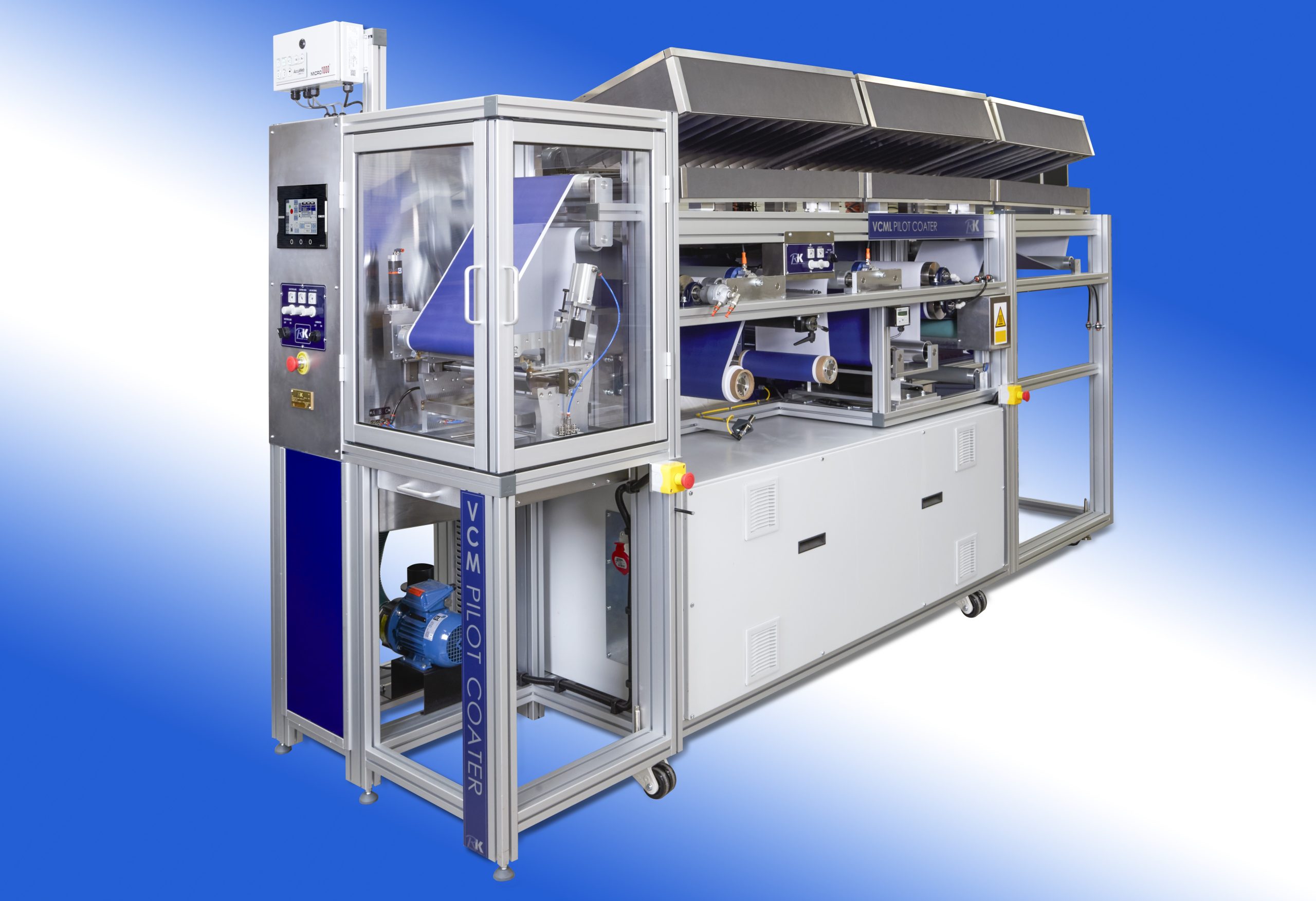
Determining the correct coating applicator is essential if waste or material giveaway is to be avoided and quality of output is acceptable. RK Print Coat Instruments VCML pilot coater enables users to select from pre-metered and post metered coating technologies including, slot die, direct/reverse and offset gravure and meter bar, knife-over-roll, rotary screen, extrusion coat and much more beside.
Precise tension control and good web handling counts but other process elements must be considered. Take drying for instance. Coatings must be coated uniformly and dried correctly. If the temperature is too hot during evaporation of water or even of solvents, the coating may dry prematurely and before the flow has time to settle to a smooth surface. The rapid drying of water or solvents causes the viscosity of the fluid to rise to such a level that the coating will not flow evenly. Adding a surfactant to an aqueous system can make for a coating fluid that flows better, which in itself may avoid orange peeling. For coatings that contain a high level of solids specific silicone surfactants can be effective. Laminations are not exempt from the orange peel phenomenon. Improper flow of laminating adhesives prior to marrying together of different webs in the nip or combining stations can occur.
 The ability to understand how the various print and coating process variables occur is half the battle. Ghosting is another condition, one that can be quite difficult to pin point where the problem lays. Ghosting is a phenomenon that occasionally occurs in printing and in coating. Ghosting in flexographic printing may be due to numerous factors and apart from being time consuming to resolve can be costly to resolve with regards to wasted material, energy and labour. Ghosting in flexo may be influenced by high press speed, ink distribution in the chambered doctor blade, the fluidity of the ink and the inability of the anilox cell to achieve the desired degree of cell fill.
If a converter finds that ghosting occurs after components such as rolls have been in storage for a while, suspect some type of migration or poor drying. Having quality control, product-monitoring devices such as advanced colour communication and proofing devices and/or pilot print/coat, laminating systems in place, either in the lab/research department or pre-press or converting area makes commercial sense.
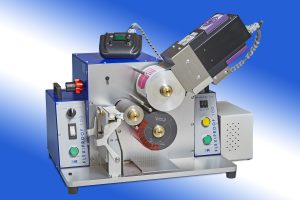
Devices such as the FlexiProof 100 and other variants such as the FlexiProof UV and LED UV are offline bench top devices that are used for training and research purposes, enabling student operators, manufactures and others to gain process experience. Essentially a scaled down but component critically exact version of a production press the FlexiProof is ideal for product quality appraisal and for determining how ink/substrates/adhesives interact over time. Performance properties such as wear resistance; scratch resistance, flexibility, durability and gloss can be evaluated along with colour appraisal and product development. Colour matching off press highlights potential on press issues with inks, etc.