
Print buyers, brand owners, marketers and converters want much the same thing. Everyone wants accuracy of colour: they want superb ink transfer; superfine tonal gradations in highlights; they want sharp open edge definition in shadows and type matter and along with print consistency they want any additional added value enhancements to be faultless. A tall order sometimes.
By Tom Kerchiss, chairman of RK Print Coat Instruments
Brand owners want to and need to differentiate their product lines from others. With product similarity on the retail shelf common and consumer indifference much in evidence, marketing teams and creatives look to the converter and packaging technologist to output items that are worthy of a second look. The quality of print can make or mar the success of a print job.
Converters are obliged to process a wide range of materials. They must take into account the characteristics of the substrate, the tear resistance, extensibility, seal and peel strength, end user requirements and much more. Converters must expect the unexpected and adapt accordingly. The surface of cups/containers, tins and the labels applied, can provide valuable opportunities for the designer and brand owner to build on brand equity using printed colour with no blemishes or pinholes.
Although substrates such as paperboard and flexible packaging are favoured for many applications tinplate and metal packaging has been around for a long time and makes for a product that looks distinctive. Proven down the years: Peter Durand of Great Britain was successfully awarded a patent for tinplate after devising the sealed cylindrical can as long ago as 1810.
Promotional metal tins, particularly in Europe are used as part of a marketing mix on products leading up to religious holidays and for birthdays or anniversary gifts. New shapes, textures, embossed and de-bossed surfaces often combined with high quality printed decorative labels and sleeves make metal boxes suitable for luxury goods such as perfumery, cosmetics, chocolates and luxury foods.
Gravure is a favoured print process for its ability to render the image as naturalistic as possible and is sometimes chosen where brand image and colour rendition is given as much priority as the goods contained within the tin.
In an age where many of us are on the go, coffee and other beverages for consumption away from the home in the car on the train can be found everywhere. Containers for liquids such as hot coffee must be leak proof and rigid and are made from single or double-sided polyethylene (PE) coated virgin fibre paperboard shaped and formed for safe handling. The PE coating and paperboard also helps to keep in the aroma of coffee.
Cups with a smooth surface provide for all round bill boarding opportunities; an opportunity for converters that print using processes such as flexography to enhance appearance with brand logo and colour. Conversion processes such as coating also provides good rub and abrasion resistance.
For some branded goods providers of hot drink take-away cups have adopted a ribbed surface for better grip. Cups are generally printed in this instance with a branded colour and on occasion with a company logo on the take away lid.
Least we forget, its not just coffee and tea that comes in cups; ice cream and single serve deserts benefit from print and from coatings. RK Print Coat Instruments VCML coater with selectable print head and coating and laminating technology has been provided for trialling materials and processes in connection with ice cream.
Quality control; the monitoring of print and other processes is essential; various supply chain providers including ink, resin, pigment and paperboard and film manufacturers also want to ensure their contribution to production is of a high standard.
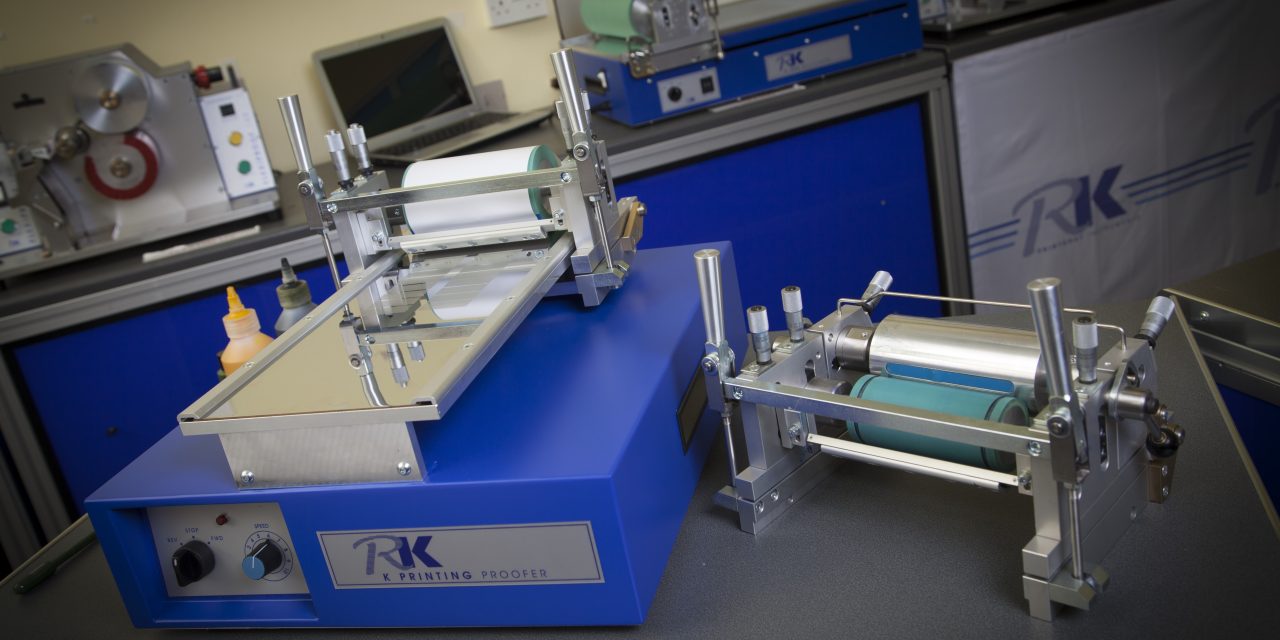
The K Printing Proofer is a versatile colour communication device that produces colour proofs for evaluation using gravure, gravure-offset and flexographic inks. It achieves this by using print heads that are interchangeable. The K Printing Proofer can be used for many aspects of colour control and sampling and is proving useful in print and converting plants that are running flexographic and gravure operations in tandem, which is sometimes the case with flexible packaging.
For the latest packaging news please visit: https://convertermag.com/category/latest-news/\