

Although used on an almost daily basis within the flexographic printing community, the term printability is difficult to define and the meaning varies according to whom you ask.
From the printers’ perspective: printability could refer to the way in which the ink will or will not adhere to the stock/material. However, printability means much more than that.
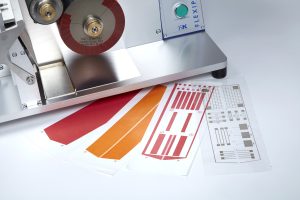 If you were to ask a paper producer as to what printability means, they could say that its how well the paper performs in a printing or converting machine – from unwind to intermediate and on rewind or another zone. Printability is a measure of the ability of a paper to provide a high quality medium. Of course that’s not all. Print mottle and unevenness of print density are of concern, affecting printability.
Printability is defined along different lines from a digital workflow perspective. For instance, a file to be printed is printable when the file is able to process the job ticket as it is attached to a file. To some degree an information strategy, how the device communicates with controllers, servers and front-end devices is decisive in terms of whether a file submitted is printable or not. Designs must be appropriate for the print process. If not, printability is jeopardised at the first hurdle.
Printability also covers a range of material properties that can affect print results. For paper this can be gloss, smoothness, whiteness, opacity, pick resistance and much more. Printability and acceptable print quality depends upon uniformity of colour, uniformity of ink transfer, rate of ink setting and drying (or curing).
An ink technologist would probably agree with everything that’s been said up to now but might add that material topography, compressibility of mounting tape, etc., ink receptivity and hold out; ink vehicle absorption and dimensional stability as well as an anilox, with suitable cell count also contributes to printability.
Physical and chemical characteristics have a bearing on printability and quality, as do the various process variables that must be compensated for or resolved if a flexo printed product is going to be deemed acceptable. How the inks react and perform on different materials takes time and often a degree of experimentation.
A move from conventional inks to water based materials can make for a significant learning curve, one that merits working closely with ink and other suppliers. Inks for food and beverage packaging must provide rub resistance, durability, chemical resistance, flexibility and consistency of colour. Differing amounts of pigment transferred onto the substrate and even the texture of a paper substrate can result in colour variation.
 Porosity or lack of porosity as well as surface energy treatment; pH and chemical/physical, external/environmental influencers such as humidity and temperature, dust, dirt and on-machine process conditions can all affect print quality and by association, printability.
Printability issues affect profits. The inability or difficulty that a printer has when faced with having to print a job on a different material than normal, or when running a new ink generally results in levels of waste that everyone would rather avoid. Matching colour so that it agrees with a customer’s expectation, takes time. Colour may agree with numerical values but colour is subjective and can be emotive. Colour, misused, selected arbitrarily or when the inks fail to deliver the anticipated results can be damaging for branded goods.
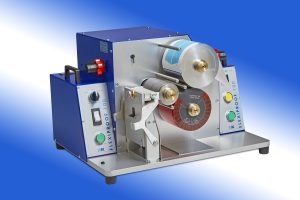
Ink formulators, packaging printers, converters and others require testing devices that enable them to bring process variable under control off-press, using a quality control or product development tool that provides results including printability, without tying up a conventional flexo production press. The FlexiProof family of colour communication proofing devices were developed with this in mind and can be used for colour matching, to determine printability and for trialling unfamiliar materials.