
Although the move towards more sustainable and eco-acceptable packaging materials is making progress, it’s far from being straightforward. The practicalities of package print and converting are complex and involve many supply chain providers; they too have their suppliers. Understandably there are trade-offs and catch-ups between various suppliers, processes and functions.
It could be said that there has never been a time when substrates and consumables have been the subject of so much attention. Paper and paperboard material in various grades and formats is often favoured as the material of choice. Compared with plastic, bio-based and biodegradable materials printing and converting with paper poses fewer problems. Printers and converters often prefer to work with paper related materials; they pose fewer problems or do they? In the pre-press and printing workplace print and substrate issues are more readily identified and resolvable than with many filmic and other materials.
 Every packaging medium has a downside. Paper and board on its own are permeable to water, water vapour, fatty esters, oxygen, carbon dioxide and nitrogen. Poor barrier resistance makes the substrates susceptible to volatiles, flavour and aroma issues.
Custom formulated coatings and internal liners and the coating and laminating of base materials with some polymers improve barrier properties but jeopardise paper and board’s positive environmental credentials and ease of recyclability.
Bio-based and biodegradable products must not only meet sustainability edicts, they must be able to be processed through a press, a coater or other converting processes. New or re-formulated materials including adhesives and resins need to trialled and evaluated under real world conditions and over time. How well for example would an existing ink modified with a new resin for binding, rheology and mechanical purposes perform with a given substrate? It is easy to overlook the fact that by altering any one component it is likely that other components will need to be adjusted or completely changed,
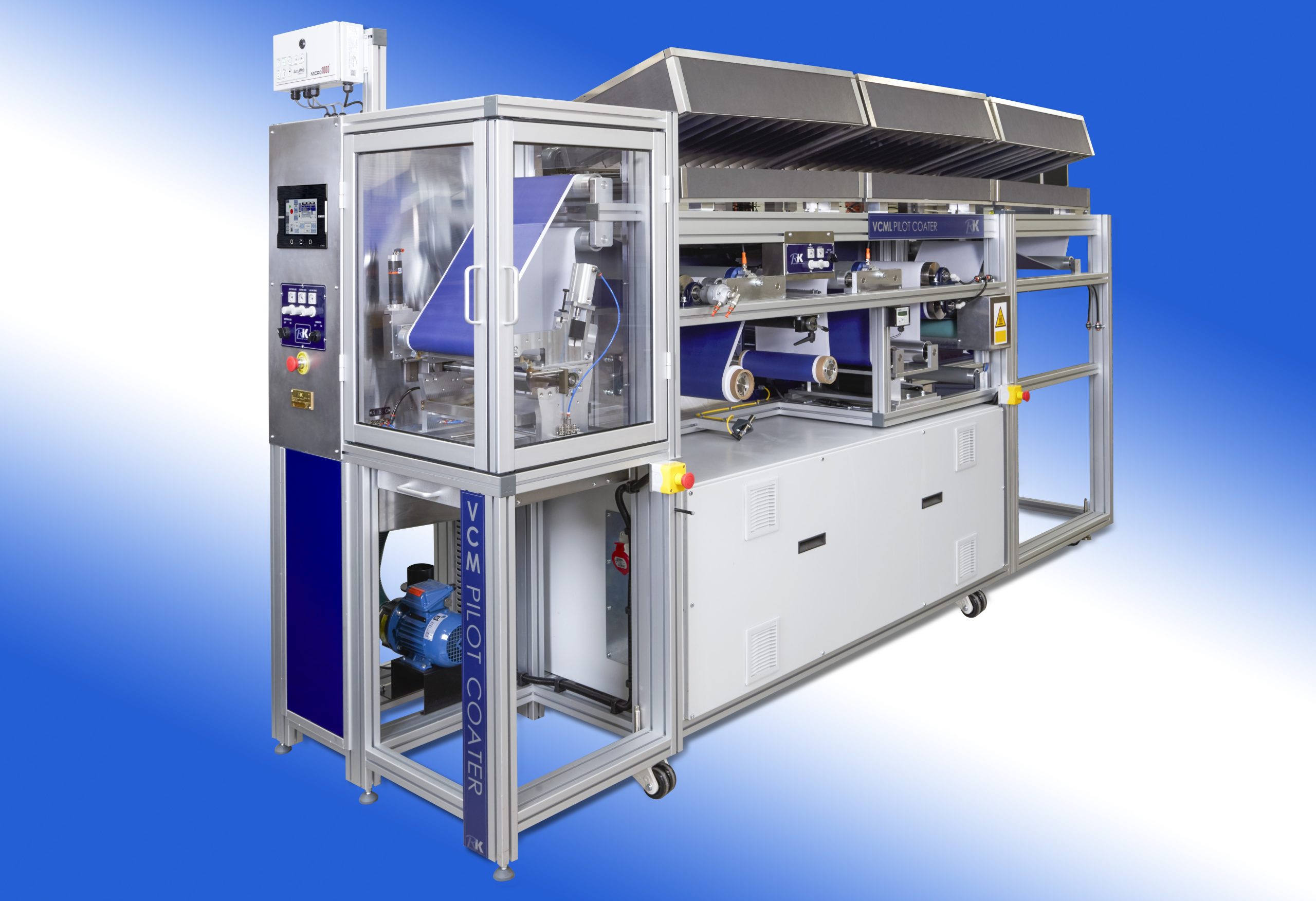
Processing, material and application complexities has resulted in the development of product development, trialling and quality control systems that enables printers, converters and consumable and substrate providers to print, coat and laminate and meet commercial and product viability objectives. RK Print Coat Instruments VCML Lab/Pilot coater with a working width of 300mm offers short run capability and is highly configurable, making it ideal for those companies engaged in the bringing to market of more environmentally acceptable products.
Selectable applicator technologies include, knife-over-roll, slot die, gravure: direct/reverse and offset, flexo, meter bar (wire or Mayer) and others are available. It can be ATEX zone protected and can be configured for clean room conditions.